
What's your formation?
What formed you into the person you are today?


If you know anything about me, let it be this: I love learning. I love learning about the processes of learning; how our brains work, what makes information stick. Catch me at a conference, taking furious notes about how neuroplasticity develops in neurodivergent brains. This is both rooted in personal and professional interest: I am neurodivergent, and I currently work with middle-grade students with low-incidence disabilities, which are disabilities affecting less than 1% of the population. My Bachelor’s degree is in special education, and my Master’s is in literacy. I’m in it for the long haul. When I tell you that I love to learn, I mean it.
It’s a good time to be curious about how learning works and doesn’t work. I am continuously grateful to see the processes of learning gain a spotlight. Learning shouldn’t stop when you graduate from high school, or trade school, or university. Learning should be a lifelong, deliberate, slow process. Learning should be a conversation. You should be asking questions. You deserve to be asking questions.
It is currently March during the school year, and March is always a special time for me. I begin to reflect on the past school year and plan out my next school year. In contrast with typical middle-grade classrooms, I teach all the subjects: reading, math, social studies, and science, as well as life skills. Traditional teaching frameworks don’t resonate within my classroom; I have to get creative and approach education holistically and take in the individual needs of each of my students. Because I have my students for three years, I have three sets of curriculum standards for each of the grades. I like to implement a kind of rolling curriculum, where students are introduced to each of the grades’ essential standards in one year, and then focus down on the specific essential standards of each grade that will be beneficial for my students both on alternate state testing and continuing education.
For example, a sixth grader coming into my classroom at the beginning of the school year will be introduced to sixth grade standards, but also seventh and eighth grade standards. The next year, when they are seventh graders, the focus will switch to seventh grade standards but they will still be exposed to those sixth and eighth grade standards. I like to think of it as a macrocosm of spiral teaching that consistently reinforces the smaller microcosms of learning they experience throughout the three years they spend with me.
I’m going to diverge a little bit and pull from the Anglican Church for a second–stay with me here. This won’t be too heavy on the theology of the Anglican Church, because that’s not my area of expertise, but I hope you can borrow from their position of learning and education. Use the following information as a lens with which to view life, maybe, and to continue education as an adult.
The concept I’m introducing is by no means specific to the Anglican Church, but the Anglican Church’s perspective on formation is the presentation that I’m most familiar with. I have always loved the Episcopalian dedication to education. Formation asks you to look both inward and outward to grow in both character and faith to align yourself on a godly path.
I was reminded of the concept of formation by a priest I follow on Instagram, Gerlyn Henry. In one of her reels, she talks about how a cathedral dean inquired about her formation, and then in the video she lists off books that have informed her throughout her faith and life.
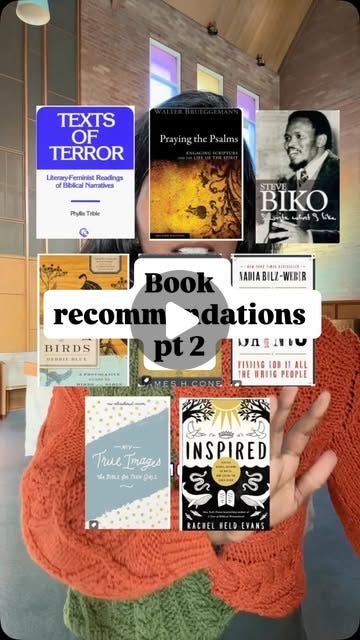
I am going to provide a very simplified description of what Christian formation is. According to the Charter for Lifelong Christian Formation, the three main parts of formation include invitation, inspiration, and transformation. Its key components include engagement with scripture, prayer and communion with God, community and discipleship, service and mission, and personal reflection and repentance. The idea is to bolster your education within the church, refine your beliefs through other people, and use your knowledge aid your communities.
I love the idea of framing personal education in a similar way. What sources have informed your life? How do you practice and execute what you have learned? How do you share your learning with your community? What conversations are you having with yourself and others about the knowledge that you’ve gained? What formed you into the person you are today?
None of this is particularly revelatory or new information within the world or the communities I’ve been exploring on the internet. Anna Howard, of the Wild Geese podcast, was the source of my introduction to the concept of a learning spiral, which is different than spiral learning, in her episode Honor Your Curiosity & Get Your Brain Back (a great watch!) and I’ve since done my own research into the Liberated Learning Model, which provides a framework with which to view learning in holistic, community-centered way: inquire, explore, practice, reflect, and share. According to its website, the Liberated Learning model is “a contemporary application of educational wisdom that belongs to Indigenous communities worldwide: learning through relationship with land and kin, honoring the body as a site of knowledge, practicing repair rather than punishment, and understanding that individual growth serves collective wellbeing.”
Do you see the same threads that I am connecting in my brain? Learning works best when it includes inquiry, when it includes community, when it seeks to build connection.
The K-12 structure of education and learning, though it is seeing significant trends toward more trauma-informed and social-emotional practices, is still very rigid. I would be remiss if I didn’t say that while special education aspires very highly, it has often been another source of trauma for students with disabilities, both on the high-incidence and the low-incidence ranges. I am lucky in that I work with a team who values very highly trauma-based practices, social-emotional learning, and taking care of the whole child. This is not the case for every special education program.
You can’t teach a dysregulated child, and so many of our students come to us dysregulated.
How do you regulate a child who is unable to communicate why they’re dysregulated? I am blessed with a classroom of students who have access to speech-generating devices and other forms of augmentative and alternative communication (AAC), but only a few of my students are fluent with their devices. Other students don’t have access to a device, so we rely on no-tech or low-tech options, including gestural communication and facial expressions, approximate sign-language, using communication boards, or by pointing to pictorial representations of words. We use a complex AAC system within my classroom to meet all students at their individual needs.
Our district’s speech-language pathologists and assistive technology department are a godsend that I’m not sure I could live without. My classroom has access to one- and two-button switches, a QuickTalk device, and various no- and low-tech AAC options thanks to them. In the past, I’ve collaborated with them on no-tech eye-gaze boards made out of a file folder and pictorial visuals. My reading curriculum allows me to teach the ASL signs for each word to my students, who then approximate and adapt the sign to their ranges of movement. One of my students is able to request some items in Arabic, and another can do the complex process of translating the English keywords that I say into their Spanish counterparts but doesn’t primarily use speech to communicate. I have Gestalt language processors in my classroom, who don’t process words as individual units of sound, but instead in phrases of meaning. “Do you want a snack?” means “I’m hungry.”
With all these means of communication at my disposal, I still have students who can’t communicate to me why they feel badly or why it feels like something is not right in their bodies.
As much as I am teaching my students, they are in turn teaching me. I have had to become rapidly fluent in their modes of communication. My students are witty, and funny, and smart in ways that don’t reflect the traditional K-12 model of education. We have inside jokes and bits; we have shorthand to communicate that would be indecipherable outside our classroom ecosystem. We coregulate daily. We do the hard work of learning, even if our rigor looks different from the rigor of a general education middle-grade classroom.
For a book study at my school, we’re reading Make It Stick by Peter C. Brown, Henry L. Roediger III, and Mark A. McDaniel. I think this is a must-read for any educator, but also for anyone interested in learning about the processes of education and how to shift your approach to education as a whole. Their framework for learning reflects both formation and the learning spiral of the Liberated Learning Model.
In addition, it takes the act of testing away from being a way to measure learning and refocuses it on practicing retrieval and learning from memory. There’s a definite benefit to all students in reframing how we apply testing. Even outside of what the book posits, think of testing anxiety, think of perfectionism, think of students with exceptionalities on both sides of the bell curve–how does changing the perspective of testing from a learning measurement to a strategic function of the learning process impact student success? How does this impact grading? Does the student whose learning increased from 25% to 50% of the content not deserve a similar grade to a student who recalls information easily?
Make It Stick says, “Many people believe that their intellectual ability is hardwired from birth, and that failure to meet a learning challenge is an indictment of their native ability. But every time you learn something new, you change the brain—the residue of your experiences is stored (7).”
In researching the topic of neuroplasticity’s role within education, I came across an article from My Brain Rewired aptly called, What Is Neuroplasticity’s Role in Learning? by Gabriel Dalexander, which tells us that “learning-induced plasticity occurs within minutes of initial exposure to novel information” which is followed by “gradual consolidation periods where specific circuits strengthen while unnecessary connections are eliminated. This natural progression typically unfolds over weeks to months, with the most significant changes occurring during the first 30-60 days of consistent practice or study.”
Furthermore, the article says that “Neuroplasticity research has revealed that apparent learning disabilities often represent alternative neural organization patterns rather than fundamental deficits, suggesting that personalized educational approaches can activate compensatory pathways to achieve successful outcomes. This paradigm shift transforms education practice from standardized delivery methods toward individualized strategies that work with each learner’s unique neuroplastic profile.”
The children yearn for holistic learning practices. So too, do the adult learners.
This article, coupled with Make It Stick, doubles down on the idea that spaced repetition is a better model for learning over rote memorization and rereading (massed practice).
The article says, “Students who engage in distributed practice sessions demonstrate enhanced long-term potentiation (LTP) activation compared to those using massed practice. Brain imaging studies reveal that individuals who space their learning over multiple sessions show 40% greater activation in hippocampal regions associated with LTP, translating to improved long-term retention rates.”
Make It Stick emphasizes spaced repetition, interleaving subjects, and elaboration. I love their definition of elaboration, which is “the process of giving new material meaning by expressing it in your own words and connecting it with what you already know.” You’ve heard it before: put what you learn into your own words and make connections from your new knowledge to your prior knowledge. These are big topics in education: KWL charts, anyone? Activating prior knowledge? What do you already know? What do you want to learn? What did you learn?
Interleaving refers to the process of mixing two or more subjects by alternating them together. Sarah Schauer has a video that gives a great example of interleaving cross-curricular subjects: How to Lateral Learn & Read! Toward the end of Anna Howard’s video in the section entitled tools for learning spirals, she introduces a creator named Tarra Stevenson, who talks about reading books in pairs, or pairing a fiction title with a nonfiction or theory title. Her video on reading in pairs, of reading against something, is another great example of interleaving.
Within my classroom, interleaving is a necessity. There are only so many hours in a school day and only so many days within a school year. Not only do my students need the continued practice of a rolling curriculum, but they also need a rolling curriculum for four subjects’ worth of standards. That’s twelve sets of standards across three years.
Reading is both the most complicated and easiest subject to interleave with the other subjects. Reading is how a student accesses curriculum, and when your middle-grade students are unable to read, this causes some issues accessing the rest of the curriculum. Reading, and reading skills, are the foundation on which all other subjects are built. I can tie science and social studies into reading, where we interact with these subjects using reading skills. I can tie reading into math, when we learn about word problems. We read against subjects often, by pairing nonfiction adapted title with a fiction adapted title. We practice reading skills while learning about science and social studies topics.
At the end of the day, or the school year, the curriculum has to be cyclical because my students with low-incidence disabilities deserve access to knowledge too.
When I taught reading intervention to students with high-incidence disabilities, I always made it a point to mention what I think are the most important questions you can ask when it comes to any text: who is writing the text; what do they gain from writing the text; and whose voices are being left out? This should, at least, be the bare minimum of what we equip our students with before they leave us. If you don’t engage with the narrative, then you will be left out of it.
This essay got away from me. At its earliest inception, the plan for this was a commentary on using the formation framework as a framework for learning as an adult. I was going to write pithy lines about how there is no learning without a community to share your learning with. I think what I’ve done here is incorporate you, the reader, into my community as I integrate what I’ve learned broadly into a specific set of questions and ideas.

 Tiktok failed to load.
Enable 3rd party cookies or use another browser
I’m going to leave you with an article on the spiral curriculum, which is different than spiral learning and even different from a learning spiral but still reflects these processes just the same.
In the 1960s, Jerome Bruner put forth a theory that suggests that every child’s intellectual ability develops in stages, dependent on how the mind is used. Instead of memorization, young children need to understand the structure of ideas or a topic’s basic ideas. As children grow, they revisit these learned structures, expanding and elaborating on them until they reach a more complete understanding of the topics and how topics relate to one another. First, you learn widely, and then you learn specificity.
I think this, too, can be applied to an adult learner’s ecosystem, whether you use a personal curriculum or a learning spiral, or some other way of accessing what you’re interested in learning about.
Happy learning, from one lifelong learner to another. Go, as Saffana says, “set your brain alight with joy.”